Brief to Inbox: a Claude system that turns one brief into finished emails
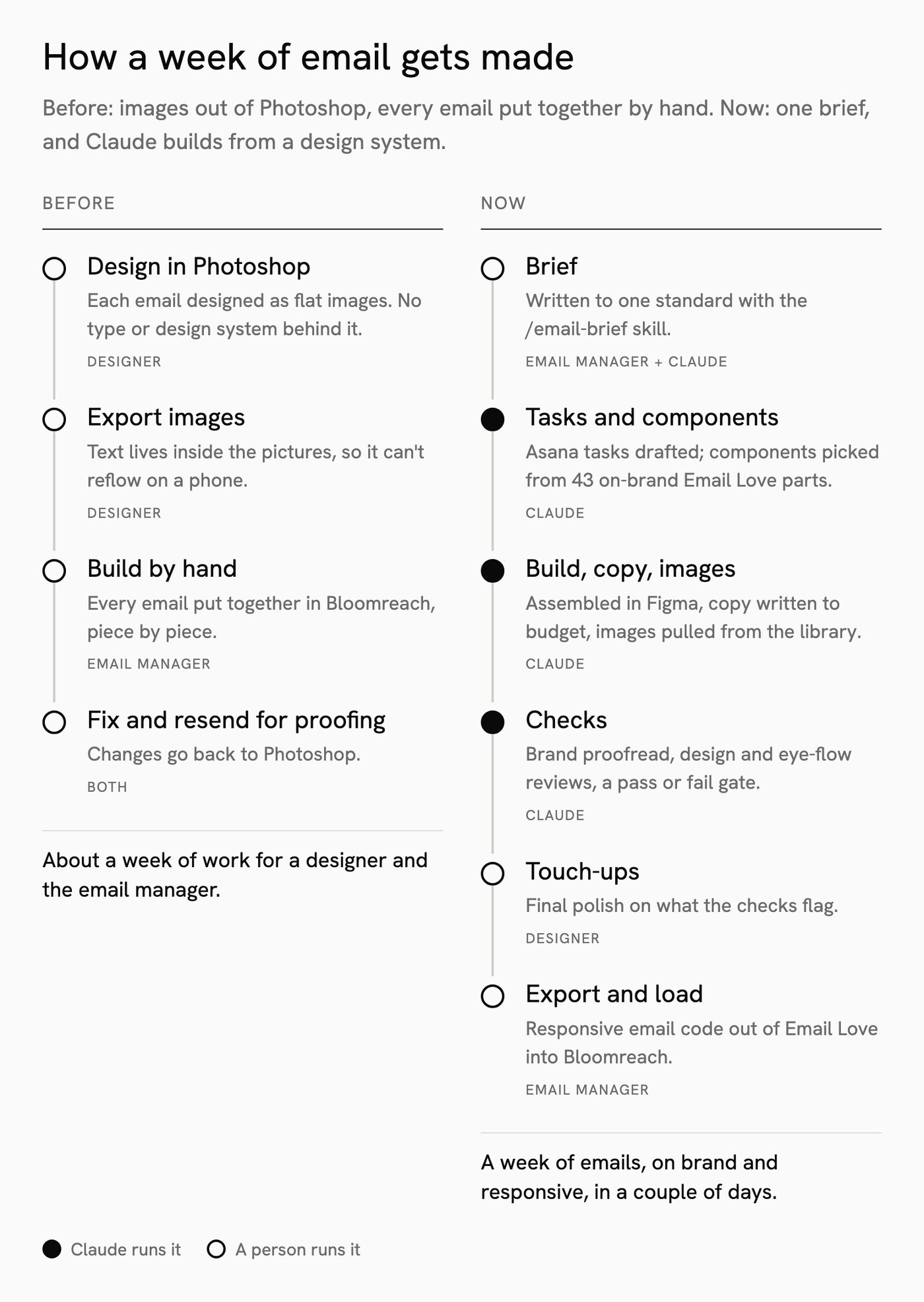
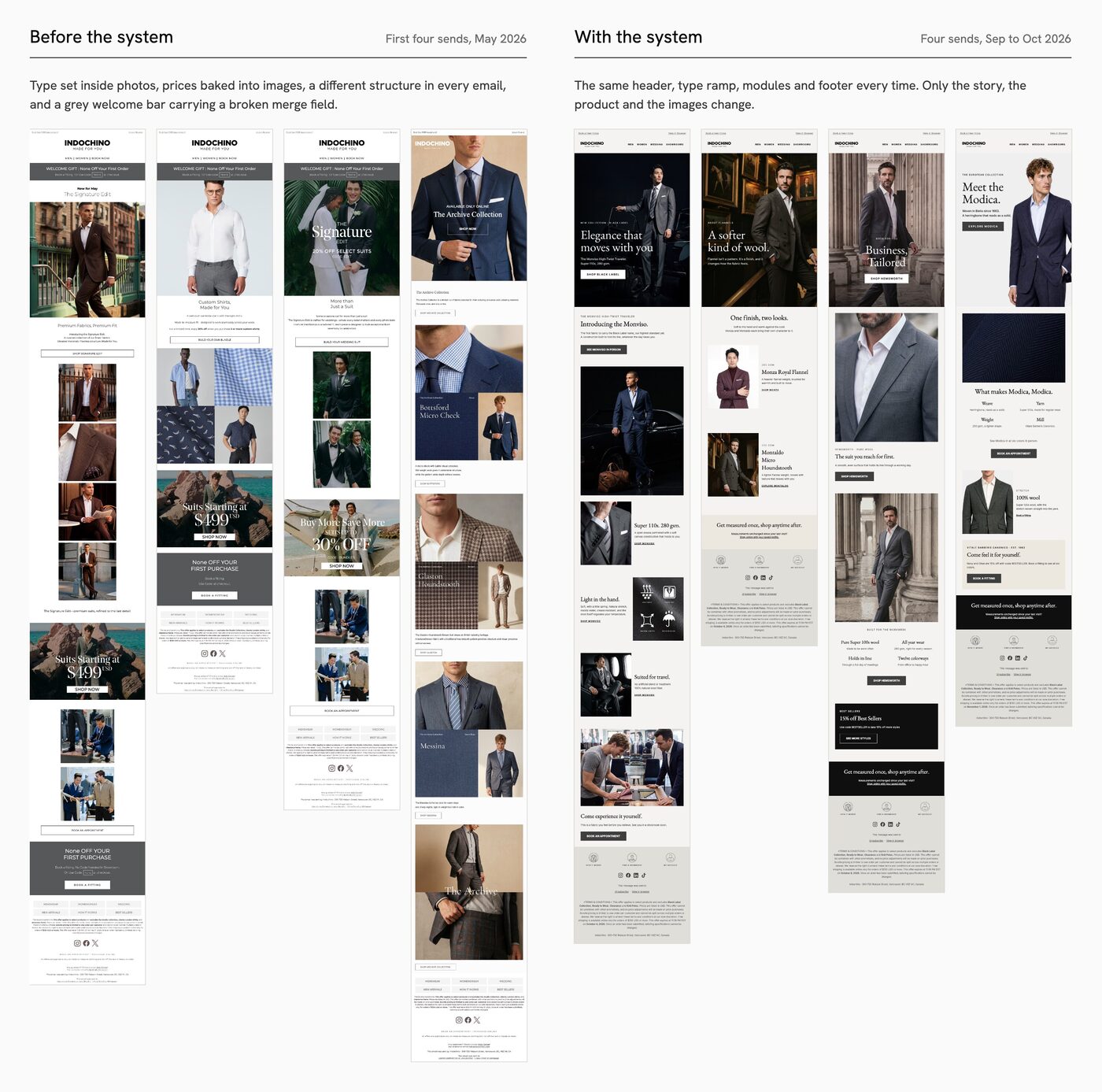
Email at INDOCHINO used to be made by hand. Each one was designed in Photoshop as flat images, with no type or design system behind it, then put together piece by piece in Bloomreach. A week of emails took a designer and the email manager about a week.
I rebuilt it as a production line out of Claude, Figma and Email Love. From one brief, Claude drafts the Asana tasks, picks from 43 on-brand Email Love components built in MJML, assembles the emails in Figma, writes the copy, proofreads it against the brand rules, runs design checks and pulls images from the approved library. The email manager now does about 90% of each email through Claude, a designer does the final touch-ups, and a week of emails goes out on brand and responsive in a couple of days.
Where AI stops. AI builds the email. People write the brief, judge anything that fails a check, and approve every email before it sends.
The input
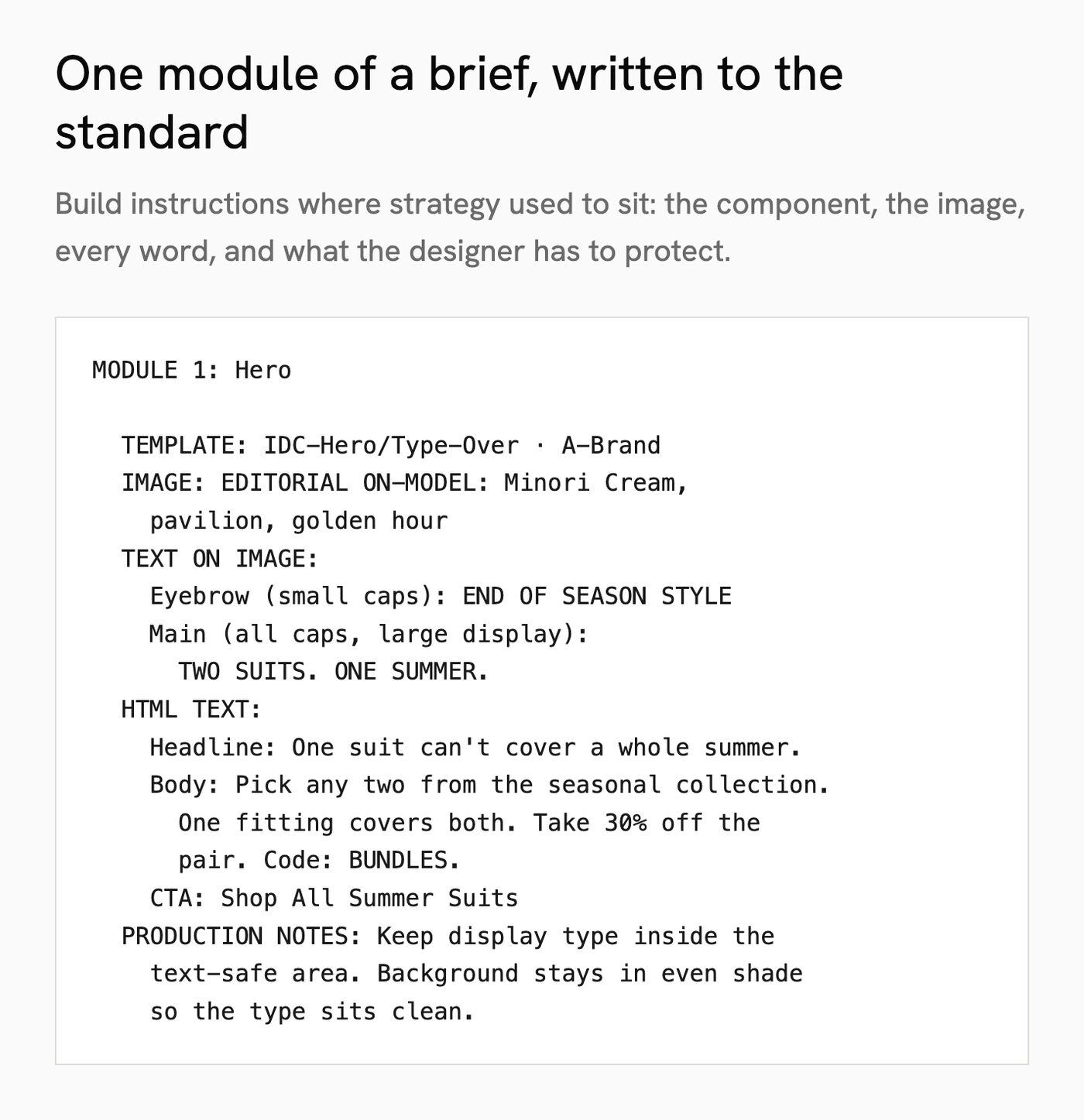
Everything depends on the brief, so the brief has a standard. Every module names a real component, the image it needs and every word of copy, so nothing has to be guessed downstream. The skill reads a playbook generated from the Figma library by one script, so a brief cannot ask for a component that does not exist.
One email, full length
Pacing matters more than the hero. This styling email holds one idea, two ways to wear the same trouser, for its whole length.

What changed
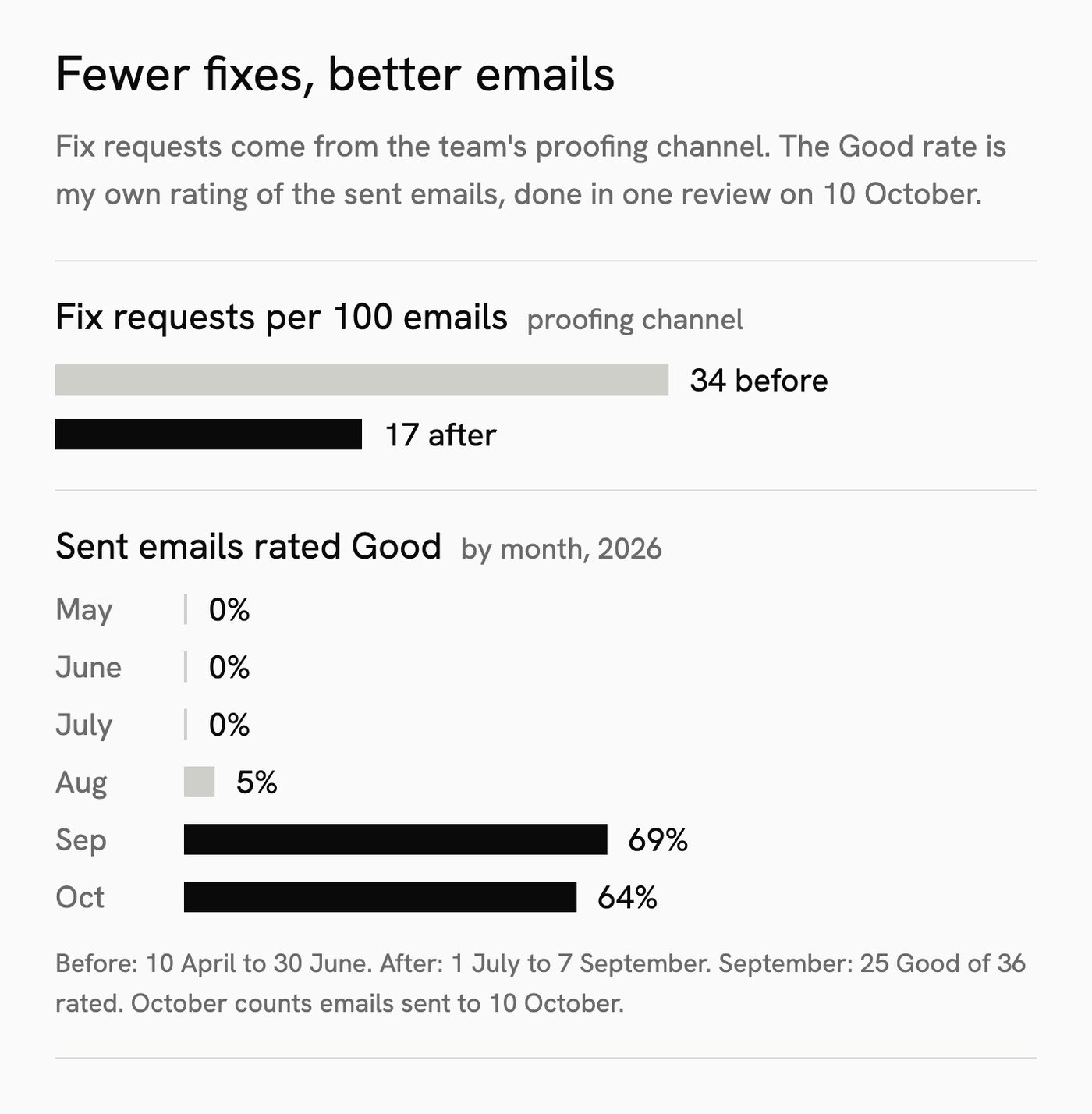
On the first full week built from the components, all seven WK31 emails were assembled working only from the brief, and nothing changed afterward. In Figma, designers went from 56% of email build time to 12%, while the email manager's share rose from 42% to 60%. A week of six emails now takes 13 to 21 hours of Figma editing at most, and proofing fixes halved.
What it does not do yet
Export still needs a person in the Email Love panel. And the weekly sends carry no conversion goal in Bloomreach, so revenue per email is not measured yet.